
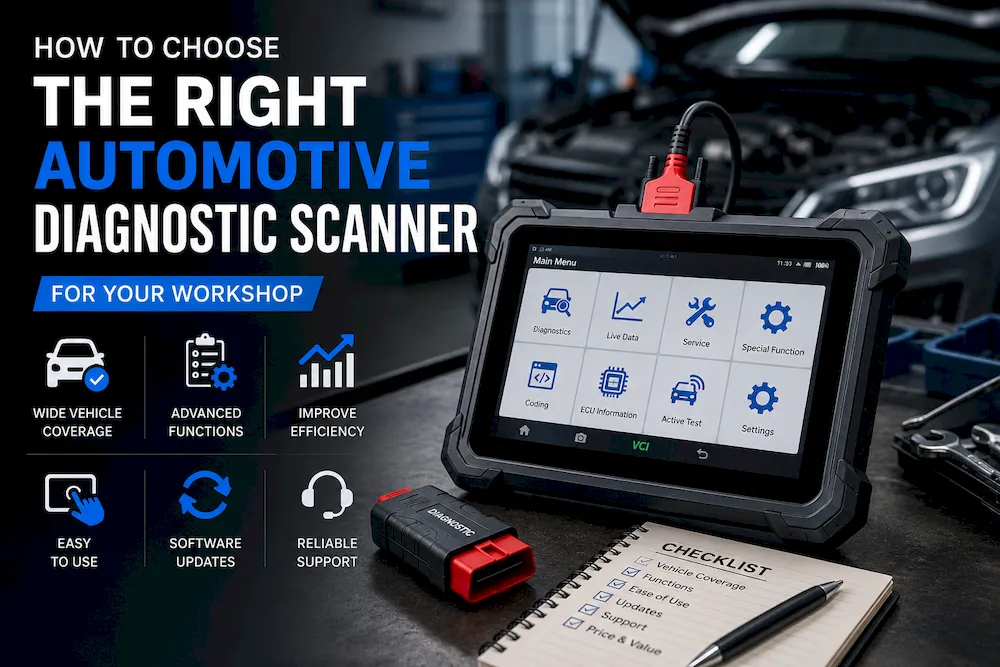
How to Choose the Right Automotive Diagnostic Scanner for Your Workshop
Choosing the right automotive diagnostic scanner is important for every repair workshop. A good scanner can help technicians find vehicle problems faster, reduce unnecessary work, and provide better service to customers.
However, there are many different scanners on the market. Some are made for simple fault code reading, while others support advanced diagnostics, coding, programming, and active tests. Before buying a scanner, you should first understand what your workshop really needs.
Consider the Vehicles You Work With
The first step is to check which vehicle brands and models your workshop repairs most often. Some scanners support many global brands, while others are designed for specific manufacturers or regions.
If your workshop services many different vehicles, a multi-brand diagnostic scanner may be the best choice. If you mainly work with one brand, a specialized scanner may offer deeper functions.
Check Vehicle Coverage Carefully
Do not only check whether a scanner supports a vehicle brand. You should also check the supported models, production years, systems, and functions.
A scanner may support engine diagnostics for one vehicle but not support ABS, airbag, transmission, or body control systems. Always review the official vehicle coverage list before buying.
Choose the Functions You Need
Basic scanners can usually read and clear fault codes. This may be enough for small workshops that only complete simple maintenance work.
Professional workshops may need more advanced functions, such as:
- Full-system vehicle scanning
- Live data display
- Active tests
- Oil and service reset
- Battery registration
- Electronic parking brake service
- DPF regeneration
- Injector coding
- Steering angle calibration
- ECU coding or programming
You do not need to buy the most expensive scanner. Choose a tool that supports the functions your workshop uses regularly.
Think About Ease of Use
A diagnostic scanner should be easy to operate. A clear screen, simple menu, fast connection, and easy-to-read results can save time during daily work.
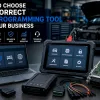
Tablet-style scanners usually have larger screens and more functions. Handheld scanners are smaller, lighter, and easier to carry. Mobile mechanics may prefer a portable scanner, while busy workshops may benefit from a larger tablet system.
Wired or Wireless Connection
Some scanners connect to the vehicle with a cable. Others use Bluetooth or Wi-Fi communication.
Wireless scanners give technicians more freedom to move around the workshop. However, wired connections may be more stable for some diagnostic or programming jobs.
Check Software Updates and Costs
Vehicle technology changes every year, so software updates are very important. Before purchasing a scanner, check how often the manufacturer releases updates.
You should also confirm whether updates are free or require an annual subscription. A scanner with a low purchase price may become more expensive if the update cost is high.
Check whether the scanner can still be used after the update period ends. Some tools continue to work with the existing software, while others may limit certain functions.
Look for Reliable Technical Support
Even an experienced technician may need help with setup, activation, updates, or compatibility. Good technical support can save time and reduce problems.
Before ordering, check whether the supplier can provide clear product information and help you select the correct scanner.
Make the Right Choice for Your Workshop
The best automotive diagnostic scanner is not always the most expensive one. It is the scanner that matches your vehicles, functions, workload, and budget.
Before buying, list the brands you service, the functions you need, and the amount you plan to spend. DJ Autotech offers different diagnostic scanners for small garages, mobile technicians, and professional workshops. Contact our team with your requirements to find a suitable solution for your business.
Add comment